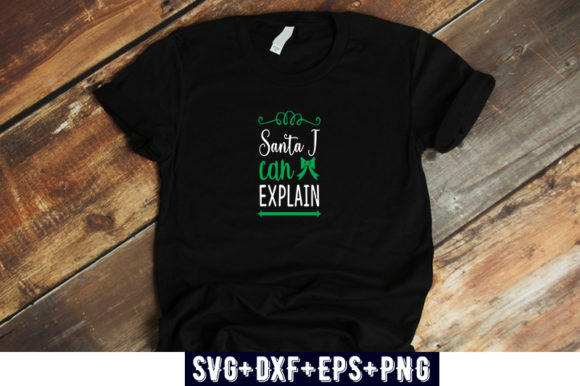
Christmas Santa I Can Explain Graphics & T-Shirt Designs
When I first opened the Christmas Santa I Can Explain file set, the thing that struck me was not just the holiday humor—it was how fast I could picture it on a dozen different products sitting in my shop’s draft folder. The phrase has that perfect mix of guilty smirk and seasonal chaos that my Etsy audience latches onto every November. This is not a delicate, elegant design. It is playful, a little cheeky, and built for people who want a t-shirt that gets a laugh at the office party or a mug that breaks the tension during family gift exchanges. That niche—the sarcastic, “caught in the act” Santa crowd—has been performing incredibly well in my print-on-demand store, and I needed a graphic that could anchor a rapid-fire collection of tees, totes, stickers, and printable downloads. This asset felt like a candidate from the start, but I always test before committing a whole product line to a single design.
Testing the ‘I Can Explain’ Vibe for Holiday Merchandise
The mood of Christmas Santa I Can Explain sits between festive rebellion and cozy humor. When I layered it over a red hoodie mockup, the phrase immediately turned the image into a story: someone got caught doing something questionable near the chimney, and now they have to talk their way out of it. That emotional hook is exactly what you want in a graphic design asset intended for social media scrolling and marketplace thumbnails. In my shop’s seasonal collection, I’ve seen that designs which spark a chuckle or a “that’s so me” reaction tend to get saved into buyers’ favorites folders well before the purchasing spike hits. The typography in this set feels bold and slightly worn, which adds just enough character without slipping into grunge. It can sit comfortably on a minimalist sweatshirt, a funny greeting card, or even a set of drinkware labels. I ran it through a few quick product generator tools inside my POD dashboard and the visual hierarchy held up—the text draws the eye first, and the subtle Santa hat icon often bundled with these kinds of designs gives it that crucial holiday recognition at tiny thumbnail size.
Formats that Make this Santa Graphic a Flexible Asset
The product description promises SVG – DXF – EPS – PNG, and that spread covers nearly every production channel a creative entrepreneur could need. The SVG became my first port of call for Cricut projects. After ungrouping the file in my vector software, I inspected the cut nodes and ran a test cut on permanent vinyl; the lines were clean enough to weed without cursing at the tiny serifs—though I always recommend scaling it no smaller than about 3 inches for apparel decals to keep the details sharp. The DXF version opened without surprises in Silhouette Studio, making this a safe pick for sellers who want to offer their customers multi-machine compatibility. The EPS gave me an easily scalable master for sublimation mugs and larger printable wall art. Finally, the high-resolution PNG with a transparent background slipped right into my Canva mockup templates, which allowed me to build listing images in minutes. As a digital product, this set reads like a creator thought about the real-world printing workflow, not just about posting a pretty JPEG on a marketplace.
From SVG to Canva: Product Possibilities Without Overcomplicating
I built an entire mini-collection with Christmas Santa I Can Explain by mapping it onto product types that move quickly in November and December. T-shirt graphics were the obvious start—black tees, heather grey sweatshirts, and forest green long-sleeve tops all gave the phrase a different personality. On black, I inverted the colors in the vector file so the text became a crisp white with a faint red accent, and it immediately looked like a merchandise graphic you’d spot at a downtown holiday market. On tote bags, the design’s proportions made a strong impression at 10-by-10-inch print areas, and my test print through a print-on-demand provider came out vibrant and crack-free. For the digital planner crowd, I isolated the PNG file, resized it into a cheerful sticker sheet for GoodNotes, and bundled it with a few coordinating clipart elements. I also dropped the design into a Canva template for sellers who want to offer editable Christmas card designs—the kind where a customer adds their own photo and sends a semi-sarcastic “from the kids” message. Across these platforms, Christmas Santa I Can Explain stayed legible, playful, and commercial in the way that makes shoppers click “Add to Cart.”
Making Product Presentation Work: Mockups, Thumbnails, and the Click Factor
In my own shop, I never publish a t-shirt design without seeing how it behaves as a thumbnail first. The Christmas Santa I Can Explain graphic, when placed on a classic red mockup, gave me a listing image that was instantly readable even at 200-pixels-wide on a search page. The phrase sits almost like a headline, which does half the job of telling the customer what the product is about before they ever read the title. I also tested it on a light grey heather product photo, and the contrast remained strong thanks to the solid black lettering present in the original vector. For multi-product bundles, I used the PNG on tumbler wraps, mug previews, and a set of printable gift tags. The design’s visual storytelling held up across all of them—they felt like a cohesive collection rather than a random mix of clipart. That consistency is what builds trust and increases the perceived value of a digital download bundle. An extra step I always take: I pull the graphic into a quick lifestyle scene mockup, such as a person holding a mug or a toddler wearing a onesie. That emotional context can boost click-through potential more than any keyword stack ever will.
Where the Design Shines—and Where You Need to Be Careful
Not every asset works everywhere, and a commercially smart seller quickly learns where to pull back. With Christmas Santa I Can Explain, the biggest strength is medium-to-large product surfaces. It thrives on t-shirts, sweatshirt backs, canvas tote bags, full-sized planner dividers, and printable wall art sized at 8x10 inches or larger. The generous spacing in the lettering means you can also use it confidently as a focal point for seasonal social media graphics or blog post banners. However, when I tested it as a tiny sticker—say 1.5 inches wide for a planner dot—the finer details in the letterforms began to blur on my inkjet, and the cut lines become more delicate than I’d trust for high-volume sticker sheet production. If you plan to sell Cricut project bundles with intricate weeding, I recommend including a slightly simplified version or increasing the recommended minimum size in your product listing notes. Dark backgrounds can also be tricky if the graphic is delivered as a black-filled design. I had to open the SVG and manually change the fill to white for dark-heather shirts, but that’s a few seconds of work in any vector program. Just double-check the transparent PNG’s colors before you drop it into a low-contrast layout or a text-heavy template, as the design’s visibility depends on maintaining a clear background-to-text separation. As a sublimation design, you’ll want to test print a small swatch first—especially on polyester-blend fabrics—to make sure the red and black maintain their saturation.
The Practical Seller’s Checklist: Mockups, Cuts, and Thumbnails
Before listing any product tied to this graphic design asset, I walked through a checklist that has saved me countless returns and low-star reviews. I started by printing the PNG on two different home printers—one dye-based, one pigment—to see if the colors shifted. The blacks stayed dark and the red kept its holiday punch. For the SVG cut quality, I ran the file through Cricut Design Space at three sizes: 4-inch vinyl decal, 8-inch heat transfer vinyl for cotton tee, and a 12-inch wooden sign stencil. Each test cut well, though at the smallest size I slowed the cutting speed to avoid catching any tight corners. I also mocked up the design as a marketplace thumbnail on both a solid red background and a busy winter plaid pattern. The phrase held its own on the solid color but got a bit lost on the plaid, so I made a store note to use clean backgrounds for the main listing image. I recommend pairing Christmas Santa I Can Explain with a simple sans serif subtext—perhaps a small “Est. 2024” or a tiny “Oops” in a handwritten font—if you’re creating a coordinated bundle. The combination of a bold display font (like the one in the asset) with a delicate script gives the collection depth without competing for attention. File management for customers matters too, so I renamed the received files clearly: “Christmas-Santa-Can-Explain_SVG_cutfile”, “PNG_transparent_300dpi”, and so on. That tiny step makes your digital product look far more professional when buyers unzip the folder.
Commercial Licensing and the Fine Print You Can’t Ignore
Any time I review a commercial design, I pause to double-check what exactly the license allows. For a t-shirt design intended for online selling, you need a license that covers physical end products and, if you plan to sell the design as a digital template, a resale or extended commercial license. The experience has taught me that even when a product listing looks generous, you must open the included license file or read the seller’s terms page. Generally, a standard commercial license covers print-on-demand merchandise, but some creators prohibit selling the raw files or restrict use on print-on-demand platforms that redistribute the design itself. Before I produce my first mug or downloadable Canva template with Christmas Santa I Can Explain, I verified that my intended use fell within the permitted scope. If the terms are silent or vague, I send a quick message to the designer—it protects both your shop and your investment. And if you plan to bundle this graphic with other design assets into a larger seasonal package, confirm the bundling rights explicitly.
Does Christmas Santa I Can Explain Earn Its Place in a Seasonal Product Line?
After testing this graphic design asset through the full production funnel—from file check to physical print to mockup creation—I can see why it would sell during the holiday rush. The phrase hits a real emotional note, the file formats are practical, and the visual style walks the line between trendy and timeless enough to be reused next year. For my own shop, it earned a spot in the “cheeky Christmas” section alongside a few pet-themed designs and a handful of family-funny tees. I’ll likely launch it as a standalone digital download t-shirt graphic, then expand it into a mug and greeting card listing after the first sales data rolls in. If you’re a content creator, blogger, or Canva template seller, this same design can easily anchor a seasonal social media kit or a set of promotional visuals. The key, as always, is not to treat any design asset as plug-and-play—test your production line, confirm your license, and make the graphic work hard for your specific product collection. When you do, a simple phrase like Christmas Santa I Can Explain turns into far more than a funny SVG: it becomes a reliable seller that helps your shop feel full, cohesive, and ready for the holiday buying wave.