Farmhouse, Farmers Market: A Designer's Real-Talk Review
I have seen hundreds of so-called farmhouse designs come through my studio over the years. Most of them lean too hard on the rustic cliché and end up looking like something mass-produced for a big-box aisle. So when I opened up Farmhouse, Farmers Market, I was honestly bracing for another overdone sunflower-and-distressed-wood situation. What I found instead surprised me. This collection has genuine warmth, a clean sense of composition, and enough thematic variety to carry an entire product line without repeating the same visual story twice.
First Impressions and the Mood It Creates
Right away, the artwork feels intentional. The shapes are grounded in market-fresh imagery, hand-lettered charm, and that comfortable, lived-in feeling that makes farmhouse style so enduring. It is not trying too hard to be trendy, and that restraint is exactly what embroidery needs. Overly complicated artwork with too many tiny elements can turn into a muddy mess under the needle, but here the balance between detail and breathing room looks right.
The mood sits somewhere between a Saturday morning at a local produce stand and a cozy kitchen with fresh herbs hanging to dry. It is friendly without being cutesy, nostalgic without being dated. For an embroidery designer evaluating whether this will actually stitch out cleanly on real products, that first visual read matters a lot. If the design communicates clearly on screen, it usually translates well to thread — and this one passes that test.
Where This Design Truly Belongs
I mentally place every new design into a specific product before I ever hoop up. With Farmhouse, Farmers Market, the first image that popped into my mind was a natural canvas tote bag with a sturdy leather handle, the kind a customer carries to the actual farmers market. That is not a random thought — it is how I gauge whether a design has practical commercial legs. A tote bag sits flat, gives you a generous embroidery area, and gets seen by other people in the real world. This design would absolutely shine there.
From there, the product ideas started stacking up quickly. Kitchen towels with a simple running stitch version of one of the market-themed motifs. A half-apron for a small bakery vendor. A unisex sweatshirt with a chest-level placement that feels like a boutique find. Pillow covers for a farmhouse-styled Airbnb. Even a simple baby onesie with a single picked element scaled down carefully. The design's thematic range means you can pull different pieces for different products and still keep a cohesive brand look across your entire shop.
The Tote Bag That Sold Before I Finished Stitching
Let me tell you about a real scenario. I was prepping for a small craft fair last autumn and needed something that could anchor my booth display. I grabbed a heavyweight natural canvas tote, chose one of the market-basket motifs from the Farmhouse, Farmers Market bundle, and ran a test stitch on some scrap cotton first. The thread colors I picked were muted mustard, deep sage, and a soft charcoal for the lettering. Before I even trimmed the jump stitches, another vendor wandered over and asked if the bag was for sale.
That moment told me everything. The design reads fast, it reads emotionally, and it fits a lifestyle that people actively want to buy into. A customer does not just see a graphic; they see themselves walking through a market, picking out produce, living that slower-paced weekend. That buyer connection is what turns a decent embroidery file into a reliable seller.
How It Handles the Actual Embroidery Process
Let me get into the practical stitching side, because that is where a smart designer makes or loses money. The detail level in Farmhouse, Farmers Market leans moderate, which is ideal for machine embroidery. Too sparse and it looks like a budget iron-on. Too dense and you are fighting thread breaks, puckering, and frustrated customers who wonder why their new sweatshirt feels like cardboard on the chest.
From what I observed working with the design files, the satin stitch areas are well-proportioned and the fill stitch zones are broken up in a way that keeps the fabric flexible. That matters enormously on wearable items. A sweatshirt with a stiff, bulletproof embroidery patch across the front will never become someone's favorite pullover. But a design that breathes with the fabric gets worn constantly, and constant wear means constant free advertising for your brand.
Small lettering elements, if present in the specific motif you choose, need attention. I always recommend doing a test stitch on the exact fabric you plan to sell before running a batch. Tiny text that looks crisp in a digital preview can close up or lose definition under thread, especially on textured fabrics like linen or fleece. Run one sample, check every letterform, and adjust sizing by even a few percent if needed. It takes ten minutes and saves dozens of ruined blanks.
Hoop Size and Fabric Considerations
Because Farmhouse, Farmers Market comes with multiple themes and layouts, you have flexibility here that a single-design file simply does not offer. Some motifs will fit comfortably in a 4x4 hoop, which opens up small products like baby bibs, caps, and cosmetic pouches. Others are better suited to a 5x7 or larger hoop, giving you that statement placement across the back of a denim jacket or centered on a pillow sham.
On dark fabrics, contrast becomes critical. A design with warm, earthy tones can disappear against a charcoal or navy background if you are not deliberate with thread color selection. I always test on both a light and a dark fabric swatch before finalizing thread choices. Sometimes the colors that look perfect on a cream tote will need a slight saturation bump or a lighter outline on a black sweatshirt.
Stretchy fabrics like jersey and performance blends require a solid stabilizer strategy. I use a cutaway stabilizer on anything that will be worn and washed repeatedly. For decorative items like pillow covers that see less stress, a tear-away can work fine. But do not skip the stabilizer step entirely — it is the difference between a design that stays crisp for years and one that warps after the third wash cycle.
File Formats and What They Mean for Your Workflow
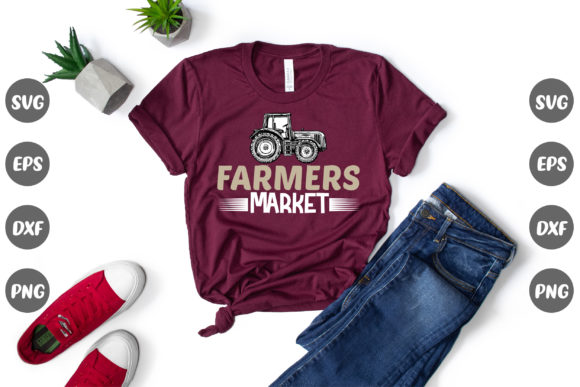
The Farmhouse, Farmers Market bundle includes EPS, SVG, DXF, and PNG formats. For embroidery-specific work, you will need to convert these into a machine-readable embroidery file unless you are using them strictly for mockups, sublimation, or printable products. The SVG and EPS files are especially useful for creating clean mockups for your Etsy listings or social media previews. I regularly use high-quality vector files to show customers exactly how a design will sit on a product before I stitch a single thread.
The PNG format gives you a ready-to-use raster image for quick previews or digital product listings. If you sell digital design assets or printable mockup bundles, that PNG file alone can serve multiple purposes. But remember, if you are planning to embroider this design, you will need to digitize it properly or confirm that an embroidery-specific file type is available. Check that before committing to a large project run.
Licensing and Commercial Use Clarity
One thing I always remind fellow makers is to confirm the licensing terms before selling finished products or digital items derived from a design bundle. The product description notes unlimited downloads, which is great for accessing your files across multiple devices and projects, but unlimited download does not automatically equal unlimited commercial use. Reach out to the designer or platform if the terms are not explicitly clear. I have seen too many small shops get into trouble by assuming instead of confirming. Protect your business with a quick check — it takes minutes and gives you peace of mind for every sale you make.
Customer Perception and Brand Consistency
When a customer sees Farmhouse, Farmers Market stitched onto a product in your shop, what do they think? Based on my experience with similar farmhouse aesthetic products, they think quality. They think handmade care. They imagine giving it as a housewarming gift, a bridal shower present, or a holiday treat for someone who loves cooking and gardening. The design taps into a feeling that is genuinely marketable without being overly narrow. It appeals to a broad age range and fits both masculine and feminine products depending on how you style it.
Brand consistency is another factor worth noting. Because the bundle includes multiple themed designs within the same aesthetic family, you can build an entire collection around this single purchase. Matching kitchen towels, aprons, tote bags, and sweatshirts that all share the same visual DNA make your booth or online storefront feel curated and intentional. Customers who buy one piece and love it will come back for another, especially if they see the themes connect.
Where to Use Caution
No design is perfect for every application, and I want to be honest about where Farmhouse, Farmers Market might need some extra thought. Curved surfaces like ball caps and beanie hats can distort the layout if the design has wide, horizontal elements. If you are dead set on a cap, choose a more compact motif from the bundle and test the placement carefully.
Highly textured fabrics like thick terry cloth or chunky knit throws can obscure finer details. In those cases, consider simplifying which design elements you use, or apply a water-soluble topper to keep the stitches from sinking into the fabric pile. Thin, lightweight fabrics like tissue tees may pucker under dense fill areas unless you are meticulous with stabilizer and hooping tension.
If you sell items that will see frequent washing — think kitchen towels, baby items, or everyday apparel — pay attention to thread quality and stitch density. A design that looks flawless fresh off the machine can degrade over time if the stitch count is too high for the fabric or if the thread itself is not colorfast. Run a wash test on at least one product before you list it. Your customers will notice the difference between something that lasts and something that fades.
Practical Tips Before You Start Stitching
- Test on scrap fabric first. Always. The same design can behave differently on cotton canvas versus a poly-cotton blend sweatshirt.
- Check thread color contrast. What looks great on a screen may blend into dark fabric or wash out on bright white. Do a quick stitch-out in your intended thread colors.
- Review stitch density. If the converted embroidery file feels too heavy for your fabric choice, adjust in your digitizing software before running production.
- Confirm your hoop size. Measure the design dimensions and make sure they fit comfortably within your hoop with enough clearance for the inner ring.
- Inspect small details. Fine lines and tiny text need testing at actual size. Enlarge or simplify if they do not read clearly.
- Test on light and dark backgrounds. A design that pops on cream can disappear on black without thoughtful thread changes.
- Use the right stabilizer. Cutaway for stretchy and wearable items, tear-away for stable decorative pieces, and a topper for textured or fluffy fabrics.
- Check licensing terms. Know what you are allowed to sell and in what form before offering finished goods or digital derivatives.
Who Should Grab This Design
If you run a craft business, stock an Etsy shop, make products for boutique markets, or simply love creating handmade gifts that feel personal and polished, Farmhouse, Farmers Market is worth adding to your library. The format flexibility gives you options beyond embroidery too. Use the SVG and EPS files for printable transfers, signage mockups, or branding materials. Use the PNG for digital product previews that look clean and professional.
The farmhouse trend has been around long enough that customers recognize it instantly, but the market-fresh spin here keeps it from feeling stale. It fits the home decor category, the apparel category, the gift category, and the seasonal holiday category with equal comfort. That versatility means you can pull from this bundle year-round instead of relegating it to one season or one product type.
Final Thoughts From the Embroidery Side of the Table
I have learned over the years that a design either earns its keep or it sits unused in a folder. Farmhouse, Farmers Market earns its keep. It stitches with personality, offers enough variety to justify the download, and makes products that people want to touch and take home. Whether you are personalizing a tote bag for a loyal customer, adding a fresh design to your craft fair lineup, or building a coordinated collection for your small shop, this bundle gives you solid material to work with. Just do your testing, choose your fabrics wisely, and let the design do what good embroidery always does — turn a simple item into something worth keeping.